
Checking Criminal History in Montgomery County
Start with the question the record must answer. The Unified Judicial System portal is the first stop for filed charges, hearings, bail, and dispositions. Pennsylvania Access To Criminal History, known as PATCH, returns a state repository response. Montgomery County Correctional Facility answers present county-custody questions, while the Pennsylvania Department of Corrections locator covers state inmates and supervised people. Police reports remain with the department that made the arrest. No one search replaces the others.
Before searching, collect the correct spelling, known aliases, an approximate filing date, and any docket, incident, OTN, or SID number. Date of birth can narrow a result, but official UJS guidance warns that it is not captured in every record. A broad name-and-county search often works better first.
- Choose the record type and its custodian before entering a name.
- Search UJS at both Common Pleas and Magisterial District Court levels with Montgomery selected.
- Compare the filing date, court, agency, charges, and events before accepting a same-name match.
- Ask the police department or correctional facility for the related report or custody facts.
- Order a certified Clerk record or PSP response when an official document is needed.
Four Montgomery Criminal Record Systems
One arrest can create four distinct files. The arresting agency writes an incident or arrest report. Intake at Eagleville creates a booking record. A Magisterial District Judge and later the Court of Common Pleas create the prosecution docket. Fingerprints and reported outcomes feed the PSP Central Repository. Each file answers a different question, and an early charge may be amended or withdrawn before the court reaches a result.
The Montgomery County government entry point shows the range of county offices involved.
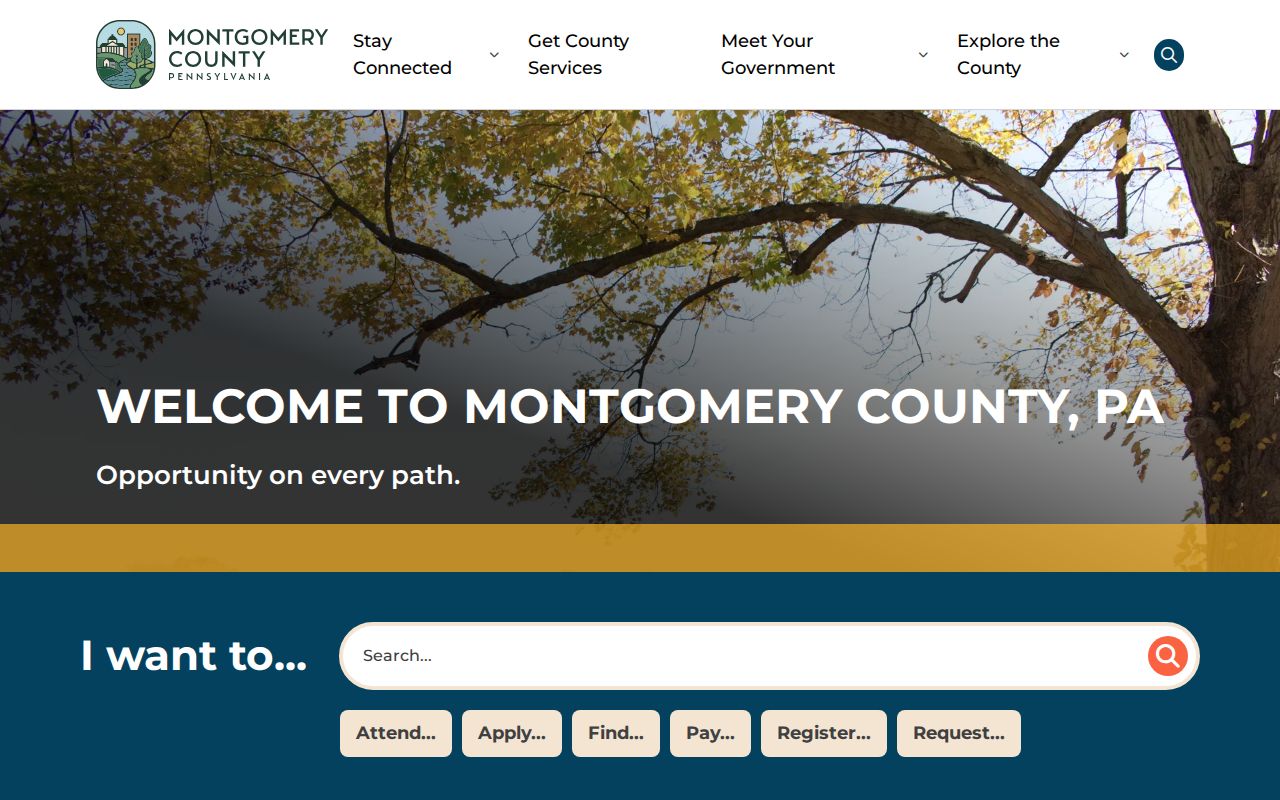
The county site is useful for routing, but court, police, jail, and state repository records still have separate custodians.
| Question | Official channel | Record returned |
|---|---|---|
| What was filed and decided? | UJS and Clerk of Courts | Docket or certified case record |
| Is someone in county custody? | MCCF | Current custody or booking facts |
| What does Pennsylvania report? | PSP PATCH or Access and Review | Repository response |
| What did officers document? | Arresting police agency | Releasable incident or arrest report |
Pennsylvania Official Background Checks
The Pennsylvania State Police Bureau of Records and Identification operates PATCH for ordinary name-based checks. An unregistered person may submit up to ten checks in one session. The standard response searches Pennsylvania law-enforcement repository records, not federal history. For a subject's own complete state history, including non-conviction information, the mail-only SP 4-170 Access and Review process is the better fit.
The PSP fee and request page explains the available products.
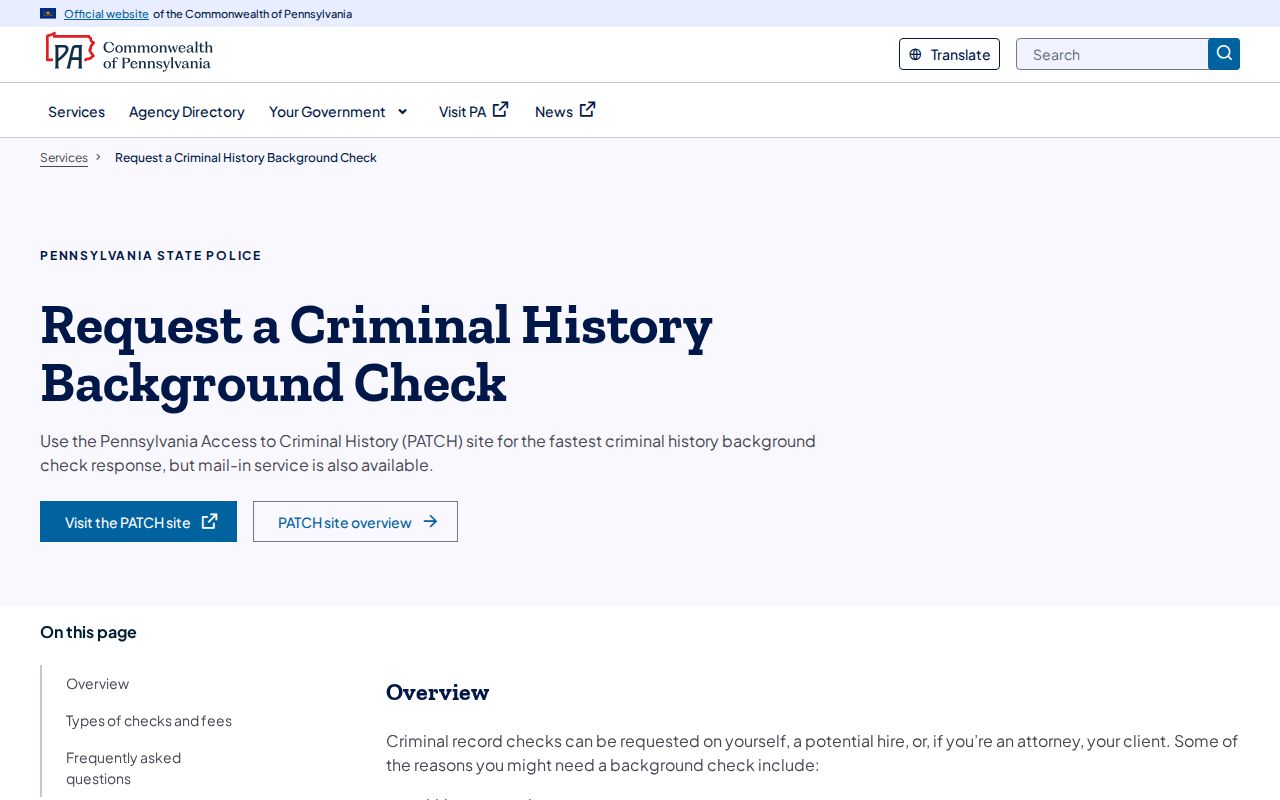
Use those official instructions to distinguish a routine PATCH certificate from a subject-only Access and Review record.
| Product | Fee | Channel |
|---|---|---|
| PATCH ordinary check | $22 | Online or SP 4-164 by mail |
| PATCH notarization | $5 additional | Eligible paid request |
| Volunteer check | Free | Online or SP 4-164A |
| PSP Access and Review | $20 | Mail-only SP 4-170 |
| FBI Identity History Summary | $18 FBI fee | EDO or mail, plus fingerprint cost |
Montgomery PATCH Results and Fields
PATCH asks for the subject's first and last name and exact date of birth. Optional details include Social Security number, sex, race, maiden name, and aliases. The requestor also supplies contact and payment details. Save the control number, subject name as entered, and request date because those items reopen the status page and certificate.
The live PATCH criminal history portal is the official online entry.
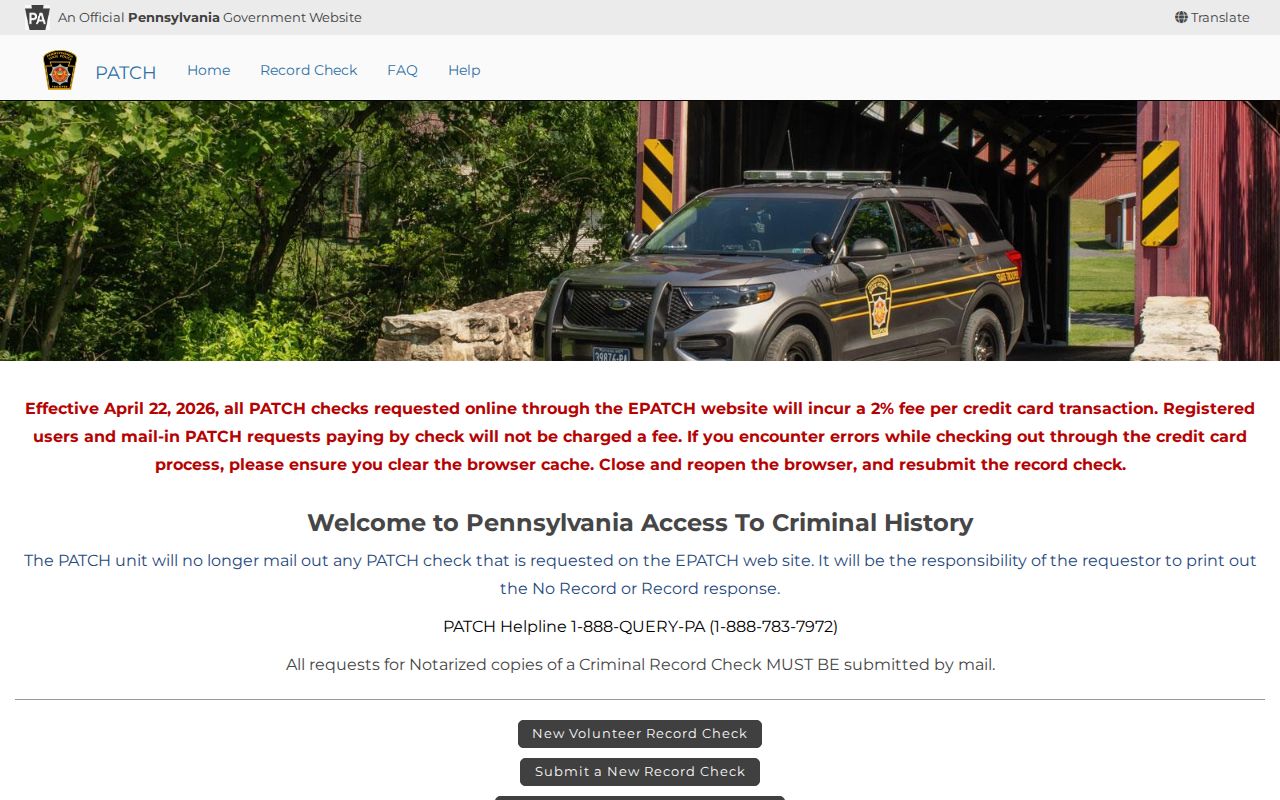
An immediate No Record result is common. Under Review means identifiers matched closely enough to require manual review, not that PSP found a criminal record. Review can take two to four weeks.
Result caution: A PATCH status is a repository response. It does not replace a Montgomery County docket or certified court disposition.
Criminal Record Types
Montgomery County criminal records are divided by event and custodian. Police incident files describe allegations and investigative work. Booking files track admission, custody, bail, and release. Court dockets follow the complaint through disposition and sentence. PSP history links fingerprint-supported arrest cycles to outcomes reported by courts. Warrant, probation, parole, and registry entries have their own limits and sources.
- Police report: requested from the municipal, transit, campus, or state agency that wrote it.
- Booking record: held by Montgomery County Correctional Facility for county custody.
- Court file: held by the assigned MDJ or the Common Pleas Clerk of Courts.
- Repository history: supplied by PSP through PATCH or Access and Review.
- Supervision and registry record: maintained by the proper county or state authority.
For local court copies, the Montgomery County Clerk of Courts is the official Common Pleas contact.
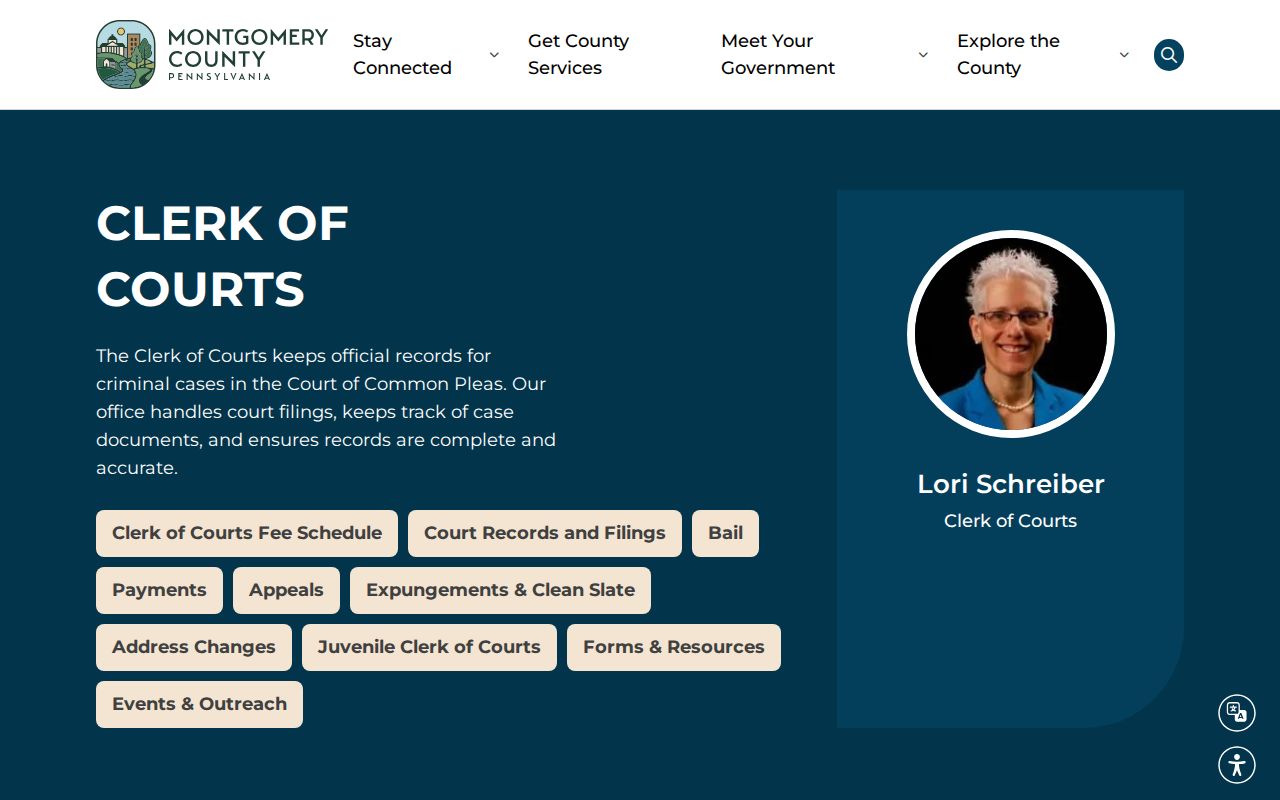
The Clerk handles criminal files and certification, not municipal police narratives or current inmate location.
Montgomery Court Records Use Code 46
Common Pleas criminal docket numbers use the CP-46-CR pattern, with 46 identifying Montgomery County. Search the statewide UJS Public Web Docket Sheets rather than expecting a separate county database. Begin with participant name and county, then repeat the search at the MDJ level when a matter is new, summary-only, or still in preliminary proceedings.
The county's court records and filings instructions explain the local path.
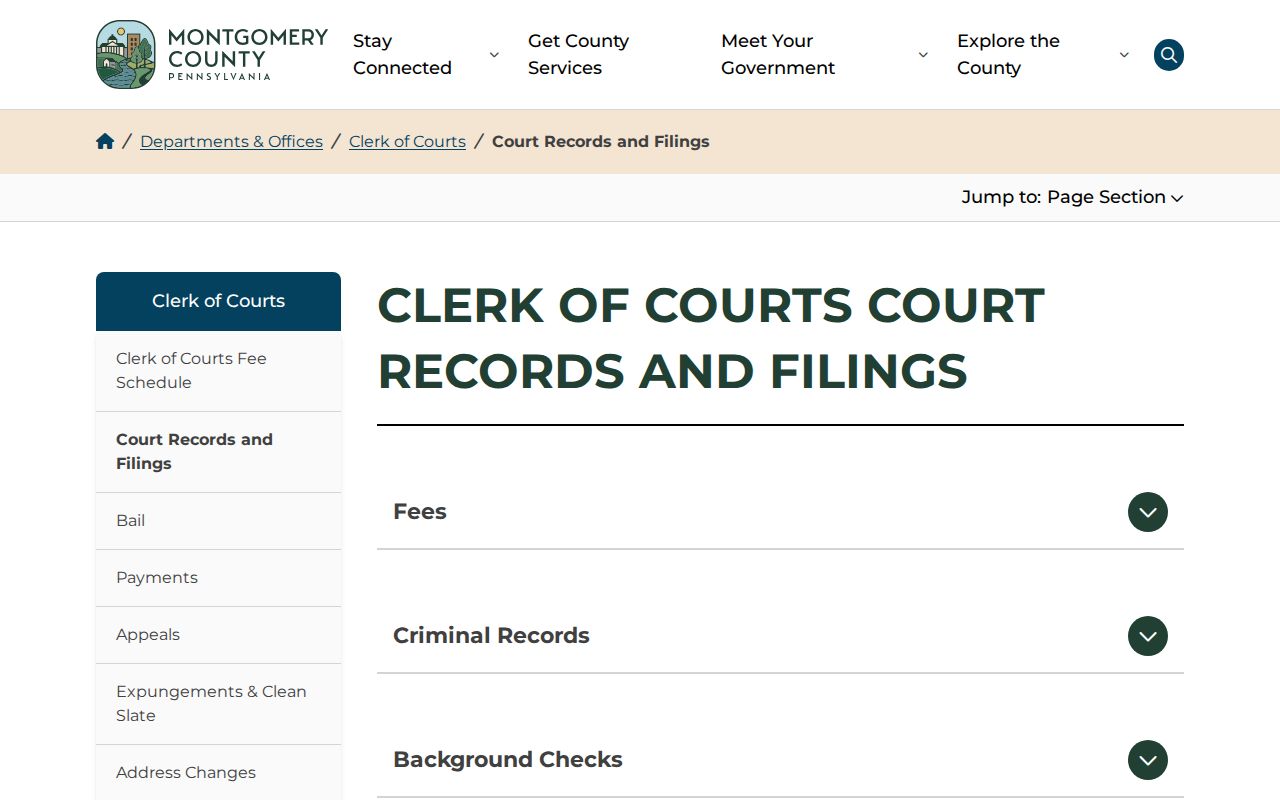
Public docket sheets can be viewed and printed free, while certification and non-web records require the Clerk or the assigned MDJ office.
- OTN
- The Offense Tracking Number that links charges through Pennsylvania systems.
- Held for court
- A preliminary result sending the case to Common Pleas, not a conviction.
- Disposition
- The recorded outcome for a charge or case.
- ARD
- Accelerated Rehabilitative Disposition, a pretrial diversion program without a guilty plea.
Inside a Montgomery County Criminal Record
A UJS docket can display the docket number, court, status, filing date, OTN, arresting agency, lawyers, judge, bail, charges, events, scheduled proceedings, sentence, and financial entries. Read each charge row on its own. One dismissed count does not decide the rest, and the grade shows the alleged offense level rather than the final outcome.
| Name and identifiers | Caption, limited demographics, OTN, SID, and related complaint numbers where entered. |
|---|---|
| Arrest and bail | Originating agency, preliminary events, bail type, amount, posting, and status. |
| Charges | Sequence, statute, description, grade, and offense date. |
| Disposition | Outcome for each count, including dismissal, plea, verdict, or other action. |
| Sentence | Orders, custody or supervision terms, fines, costs, and restitution entries. |
| Case activity | Hearings, motions, warrants, appeals, and dated docket events. |
Attached filings are not always public downloads. PACFile document access depends on the user's role, while paper and certified material remains available through the proper court office when public.
Pennsylvania grades also help a reader interpret a charge row. An F1 carries a general maximum prison term of 20 years, F2 ten years, and F3 seven years. The general ceilings for M1, M2, and M3 are five years, two years, and one year. A summary offense generally carries up to 90 days unless its own statute provides otherwise. Those labels describe the charged or convicted offense level, not whether the case ended in guilt. Specific laws and repeat-offender provisions can change the exposure, so the statute and disposition columns must be read together.
Montgomery County Custody in Eagleville
Montgomery County Correctional Facility holds men and women awaiting court action or serving county sentences. It stands apart from the Norristown courthouse, so a docket search and a custody inquiry may lead to different places. No verified county inmate roster was found in the official research. The practical fallback is to call the facility, review UJS for bail and case status, use VINELink for custody notices, and file a focused request for releasable booking facts.
The Montgomery County Courthouse facility page identifies the court location.
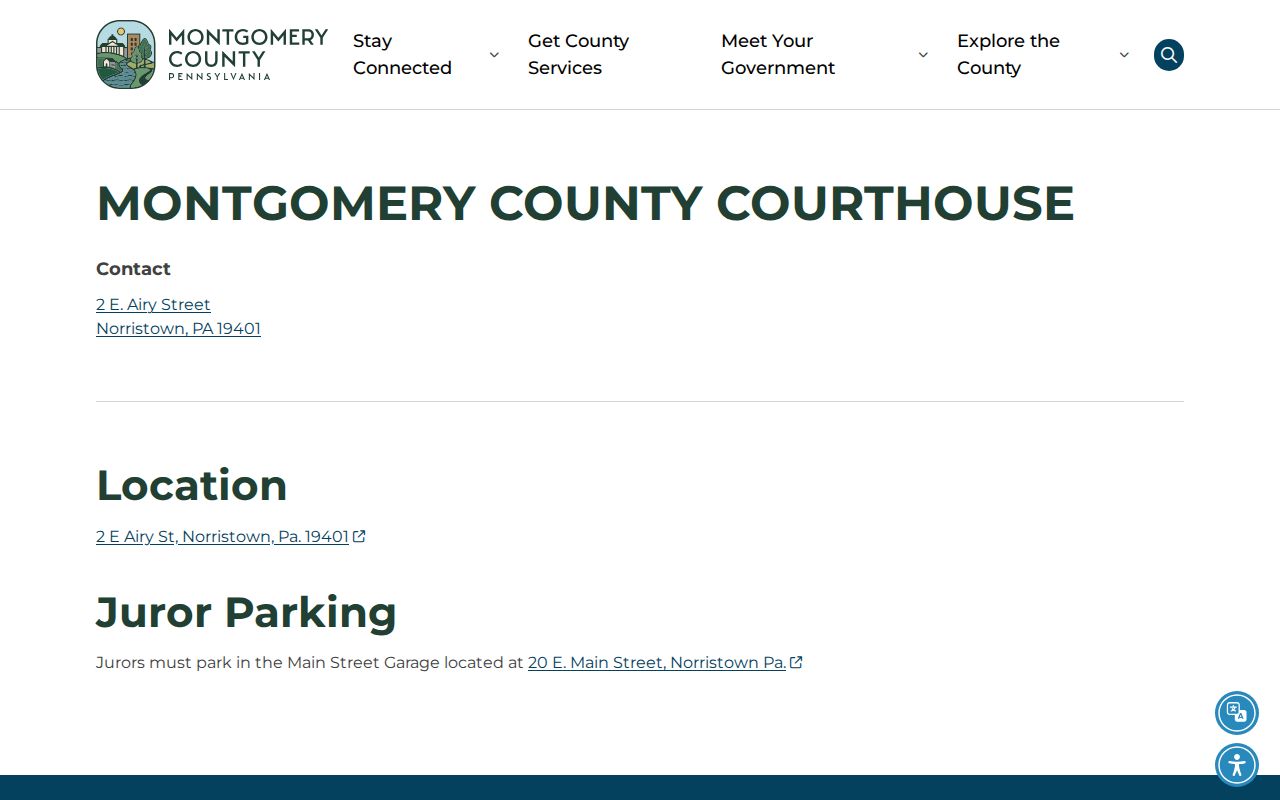
Court visitors encounter security screening in Norristown, while custody questions belong with the separate Eagleville facility. A state sentence moves the locator task to Pennsylvania DOC.
Booking begins when the arresting agency delivers a person with legal authority for detention. Intake staff inventory property, establish an identity record, take fingerprints and a photograph, conduct health and classification screening, and enter charges and bail from the complaint or court. Publicly releasable facts may include admission, committing agency, charge, bail, custody status, and release. The precise MCCF public field set was not verified, so it should be requested from the facility rather than inferred from another county's roster.
Public Access Laws in Pennsylvania
Public access depends on both the kind of record and its custodian. The Pennsylvania Right-to-Know Law sets a five-business-day response framework for agency records, but judicial records use court policies and criminal investigative records have special limits. A request may be narrowed, denied, or redacted when it reaches protected identities, an active investigation, juvenile information, or security-sensitive facts.
Key Pennsylvania authorities:
Pennsylvania Right-to-Know Law sets the general public-request process.
18 Pa.C.S. § 9121 governs PSP dissemination of criminal-history information.
UJS Public Access Policy controls electronic court information and correction requests.
18 Pa.C.S. Chapter 91 includes expungement and limited-access rules.
Inspection of general county records is normally free. Copies cost 25 cents per standard black-and-white page, specialized media and postage cost their actual amount, and record certification is $1 under the county schedule. Court certification uses a separate Clerk fee schedule.
Montgomery JustFOIA Request Routing
General county requests may go through JustFOIA or to the County Open Records Officer by mail, email, fax, or in person. Law-enforcement requests go instead to the District Attorney's Open Records Officer, and a municipal police report belongs with the police department that created it. Sending every request to one county inbox causes delay and may reach an office with no custody of the document.
The Montgomery County JustFOIA portal accepts general county submissions.
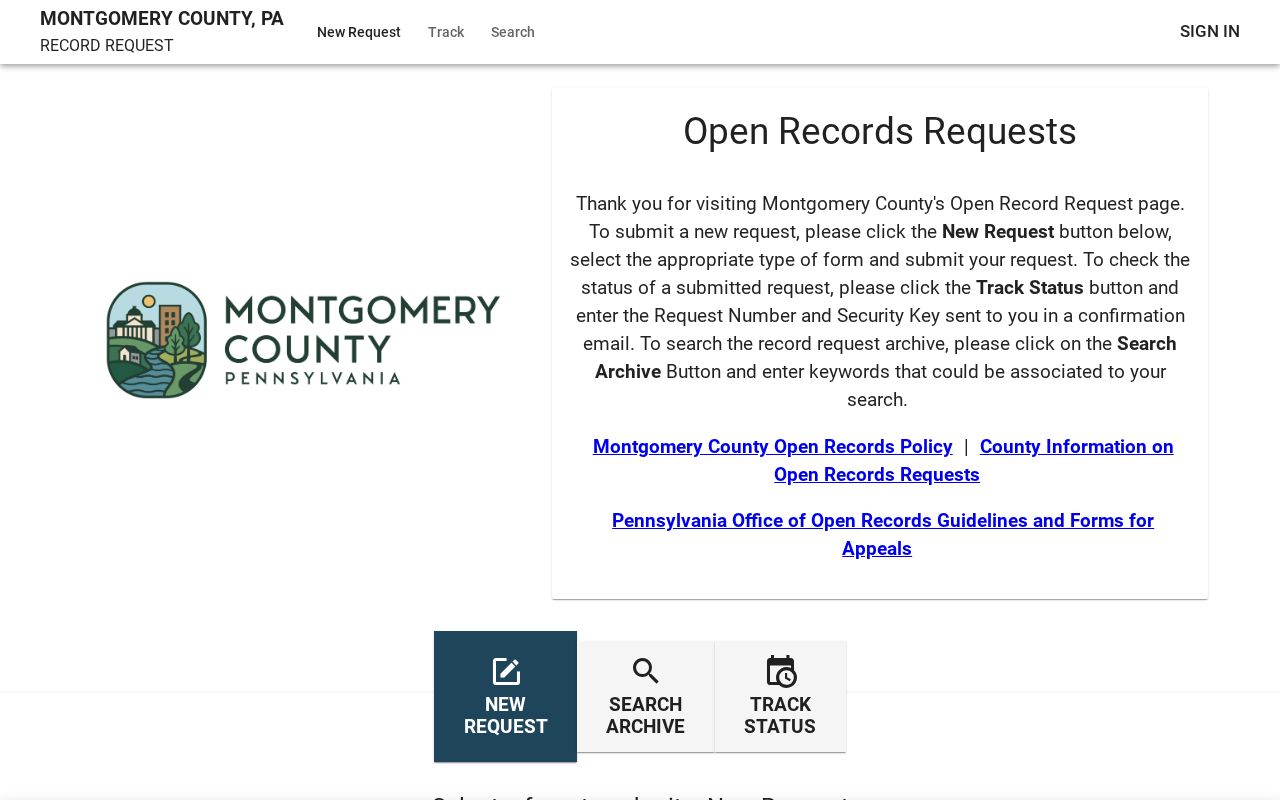
Describe a specific record, date range, office, and preferred format. A person need not state a purpose under ordinary RTKL, but release limits still apply.
The county's open-records instructions list the request and appeal channels.
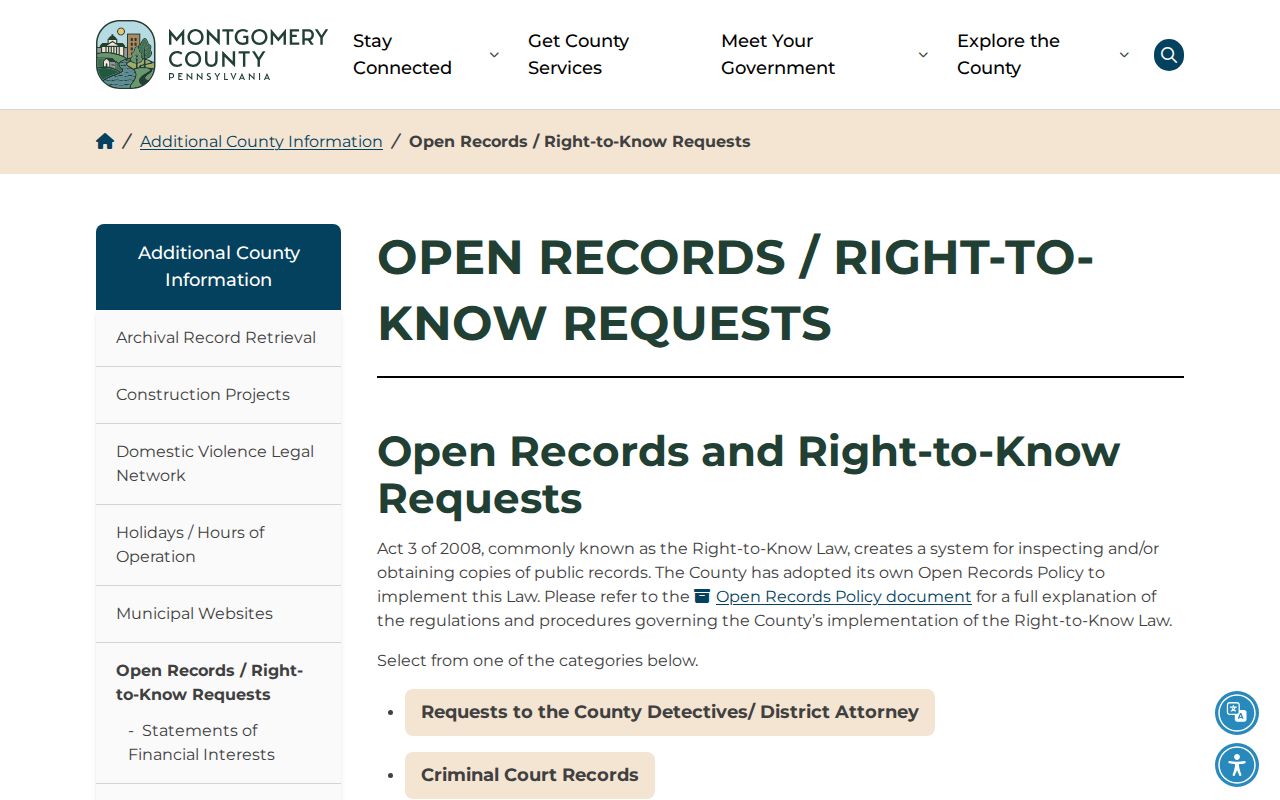
An ordinary Office of Open Records appeal generally must be filed within 15 business days, while some criminal-investigative denials follow a special county DA appeal route.
Police audio and video can follow another path. A sheriff body-camera or audio request is governed by Pennsylvania Act 22 rather than ordinary RTKL. The requester identifies the incident date, time, location, people involved, relationship to the event, and requested recording. Because the request is time-sensitive, it goes to the agency that made the recording. The general county portal cannot substitute for the correct law-enforcement custodian.
Sealed, Expunged, and Restricted Records
UJS omits juvenile, sealed, expunged, pending-expungement, limited-access, and retention-destroyed dockets from public search. Pennsylvania expungement removes qualifying records under 18 Pa.C.S. § 9122. Adult conviction relief is narrow. Non-conviction outcomes, some summary cases, age-based circumstances, and successful ARD cases may qualify under defined conditions.
Limited access is different. It blocks ordinary public dissemination without destroying the record, and authorized agencies may retain access. Section 9122.1 provides a petition route, while Clean Slate under § 9122.2 automates limited access for qualifying cases. The Montgomery Clerk accepts expungement filings by mail or in person when a fee is required because PACFile does not accept those filings. The District Attorney receives notice and may object before a judge acts.
Montgomery Clean Slate Record Updates
Automatic Clean Slate work moves through more than one system. Montgomery County explains that AOPC sends qualifying conviction data to PSP each month for repository processing. That means an order or automatic match may not appear everywhere at the same moment. Save the court order and check both the county docket and repository response.
If a cleared case remains in UJS, contact the filing court or Clerk through the judiciary's data-error process. A PSP mismatch calls for an Access and Review response plus the certified county disposition. Private copies may require a separate dispute after the official sources update.
Note: A dismissal or completed ARD does not erase every Montgomery County criminal record without the required expungement process.
Montgomery County Warrant Record Gaps
No authoritative countywide active-warrant search was found on the official Montgomery County site. UJS may show a bench-warrant entry, but it is not an operational clearance certificate and can lag police systems. Sealed search warrants and unserved investigative warrants are not public. Anyone addressing their own warrant should contact the assigned court, police agency, or counsel and follow official instructions.
A bench warrant often follows failure to appear or comply with a court order. An arrest warrant authorizes an arrest, while a search warrant authorizes a defined search. Pennsylvania DOC maintains a separate parole absconder list, which does not cover every local warrant.
Montgomery Probation Records and ARD
Montgomery County Adult Probation and Parole is an extension of the county Board of Judges. Seven geographic units support general supervision, ARD, presentence investigations, DUI services, house arrest, transfers, and specialty treatment. There is no broad public name search for county probation. UJS can show a sentence and later violation events, but officer notes, treatment data, risk assessments, and presentence reports are not ordinary public records.
The Adult Probation office page lists the county's supervision services and locations.
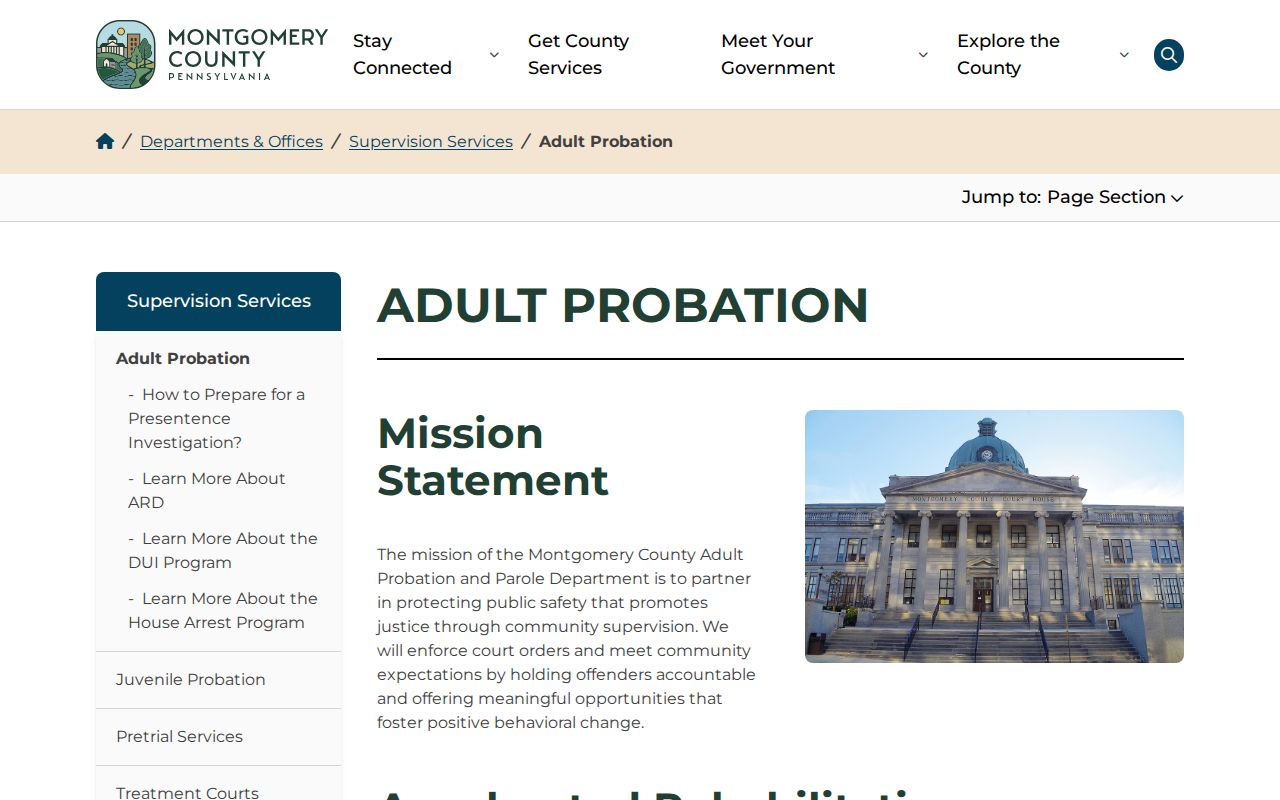
Norristown is the main office, with satellite counters in Lansdale, Willow Grove, and Pottstown. Those are supervision offices, not public criminal-record search desks.
A docket may show that probation was imposed or that a violation hearing occurred. It cannot provide a full supervision file. A violation may concern a technical condition or a new offense, and the judge decides detention or revocation after the required proceedings. For state parole or DOC supervision, use the Department Supervised Individual Locator instead of the county office. The two systems reflect different sentencing authorities.
Montgomery Fingerprint Record Checks
IDEMIA and IdentoGO capture digital fingerprints for statutorily authorized FBI checks in Pennsylvania. Registration comes first. An appointment is recommended, though a pre-registered person may use a site during operating hours. Program service codes, site hours, and fees vary, so a single Montgomery County price should not be assumed.
The Pennsylvania IdentoGO location finder provides current sites and scheduling.
Fingerprint checks are tied to authorized purposes and official program rules. For a personal federal history review, the FBI Identity History Summary uses a separate subject-only process.
Montgomery County Criminal Records by City
Police report access remains local even though Montgomery County criminal cases move through statewide and county systems. Norristown, Pottstown, and Lansdale each have a distinct police records route. Their city pages keep that local detail at the center while routing court dockets, county custody, and state repository checks to the proper broader source.
Norristown Criminal Records
County seat with police records at 235 East Airy Street and Common Pleas records at 2 East Airy Street.
Pottstown Criminal Records
Police Records Division handles arrest, accident, and incident reports from its High Street counter.
Lansdale Criminal Records
Police requests use a dedicated form, email address, and Suite 101 route at One Vine Street.
Norristown Police uses a payment-and-records-counter process for report copies. Pottstown publishes clear records hours, a separate accident-report fee, and a web RTKL form. Lansdale splits police and non-police requests between different suites and email addresses in the same building. In all three places, preliminary and summary court records still run through an assigned Magisterial District Court, and filed felony or misdemeanor cases move into Montgomery County Common Pleas.